
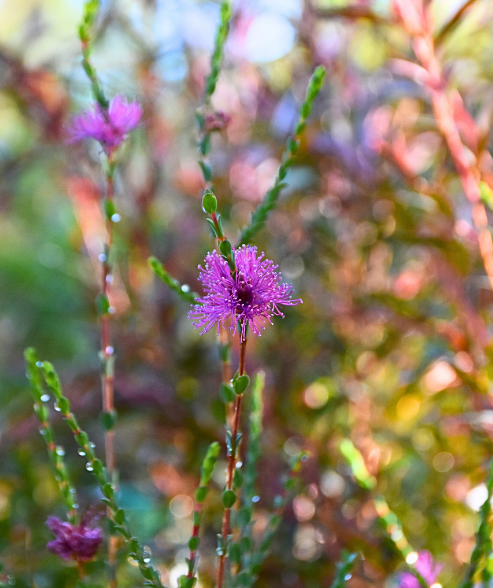
Botanical Name
Melaleuca gibbosa ‘Pink Passion’
Common Name
Pink Passion (Slender Honey Myrtle)
Description
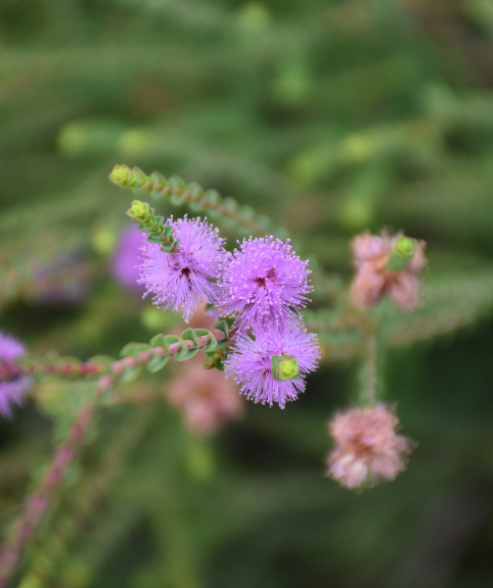
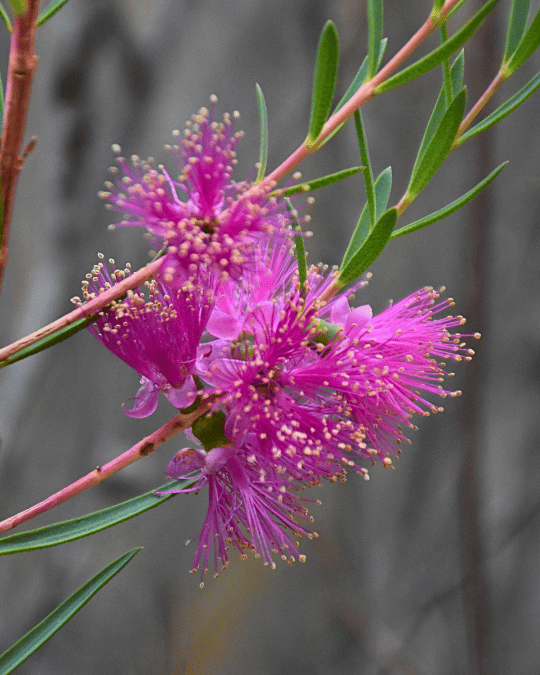
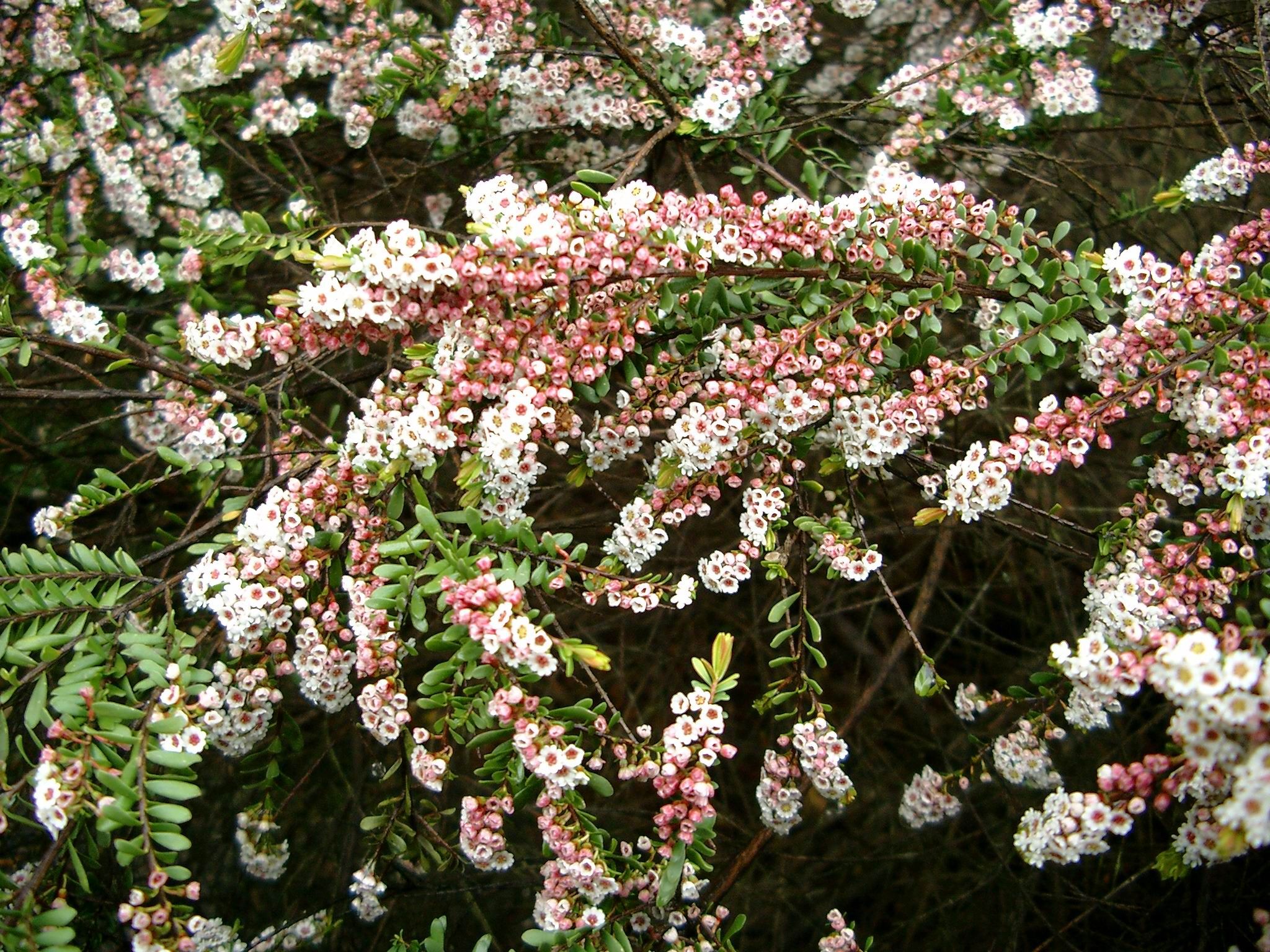
Compact, rounded shrub with fine branches and small, sessile, grey-green leaves arranged in opposite pairs. Produces short spikes of deep pink flowers in late spring and summer, with numerous prominent stamens. Woody capsules become embedded in the older stems. Responds well to light pruning to maintain a dense habit. Suited to full sun or part shade and moist, well-drained soils, but tolerates drier conditions once established.
Plant Category
Medium Shrubs
Size (H x W)
1.5 m × 1.2 m
Habitat
Occurs in south-eastern South Australia, southern Victoria and Tasmania, in heathland, low open forest and shrubland, commonly on sandy soils in moist or swampy sites, including areas over limestone.
Cultural SIgnificance
Traditionally valued by Aboriginal peoples as part of the diverse Melaleuca family, with honey myrtle species being important for their nectar-rich flowers and as components of traditional landscapes and healing practices.

Content Disclaimer