
Botanical Name
Lambertia formosa
Common Name
Mountain Devil
Description
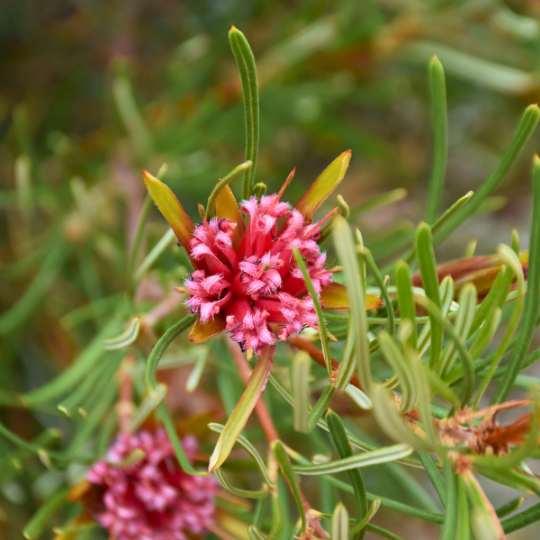
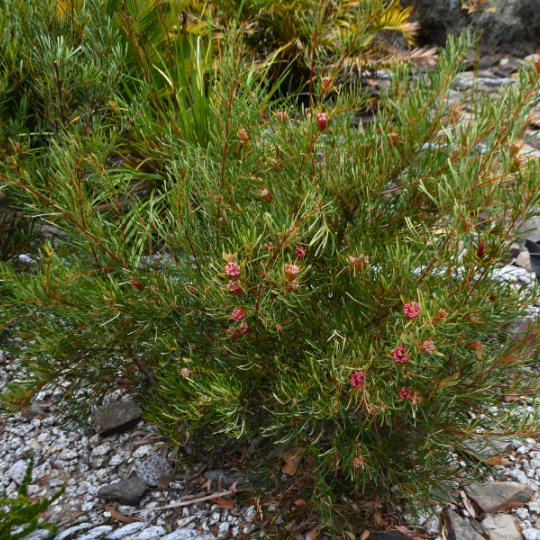
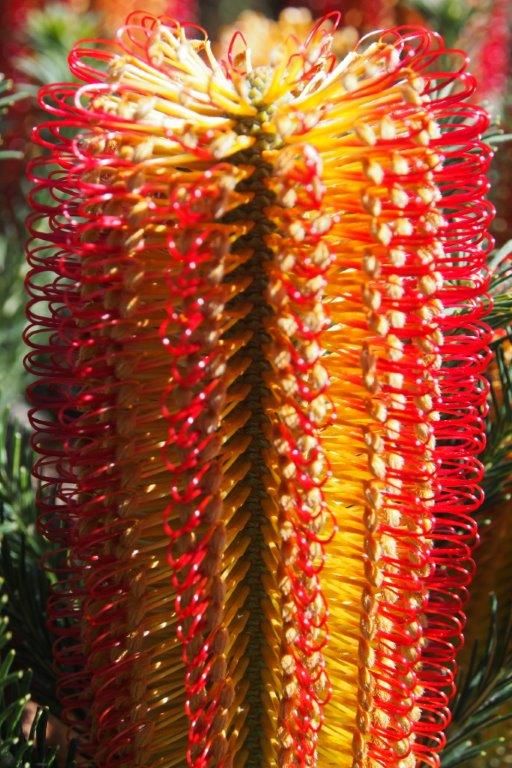
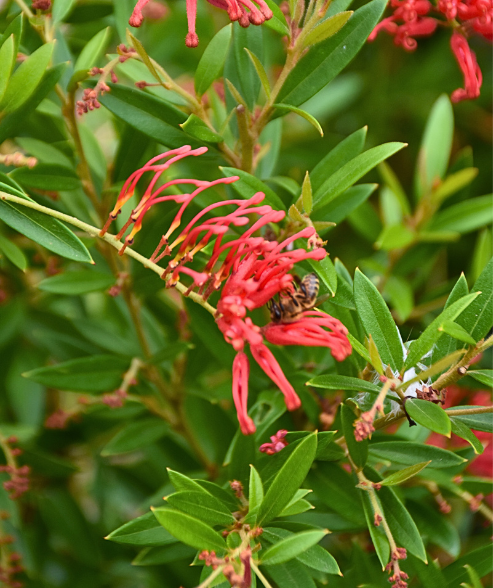
Lambertia formosa is a compact to upright shrub with a dense, bushy habit, typically growing 1.5–2 m tall. It has stiff, leathery, dark green leaves that give the plant a distinctive texture. Striking clusters of bright red tubular flowers appear from late winter through spring, and often into summer. Its long-lasting flowers attract birds and make it an excellent feature plant for wildlife plantings and large containers.
Plant Category
Medium Shrubs
Size (H x W)
1.5-2 m × 1.5-2 m
Habitat
Lambertia formosa is naturally found along the coast and tablelands of New South Wales, where it grows in heath and open woodland on sandy, well-drained soils. It performs best in a sunny position with free-draining soil and is well suited to low-humidity climates. Once established it is reasonably drought tolerant, though occasional deep watering during extended dry periods is beneficial. It tolerates light frost and responds well to light pruning after flowering to maintain a dense, tidy shape.
Cultural SIgnificance
Traditionally valued by Aboriginal peoples as part of the diverse Proteaceae family, with the nectar-rich flowers being important food sources for native wildlife and the distinctive seed pods having cultural significance in traditional storytelling and seasonal indicators.

Content Disclaimer